Evaluating a stock is the systematic process of analyzing a company’s financial health, operational performance, and market position to determine its suitability for an investment portfolio. For many individual investors, the Stock valuation guide market can initially appear as a chaotic collection of fluctuating tickers and emotional reactions. However, professional evaluation seeks to strip away the daily “noise” of price movements to focus on the underlying business. This disciplined approach transforms an investor from someone merely speculating on price charts into a part-owner of a productive enterprise.
This process matters because the market price of a stock rarely reflects its true value at any given moment. Prices are frequently driven by short-term sentiment, news cycles, or broader macroeconomic shifts that may have little to do with a company’s long-term viability. By learning how to evaluate a stock, you develop a framework for making decisions based on data rather than impulses. Investors who understand stock valuation also tend to make better portfolio diversification decisions, which is why understanding What Is Asset Allocation? A Simple Strategy for Beginners can help you build a balanced investment strategy alongside individual stock selection. Understanding the distinction between a company’s current trading price and its intrinsic value is the cornerstone of risk management and sustainable wealth building.

What Is Stock Evaluation?
Stock valuation guide, often referred to as fundamental valuation, is the method used to determine the intrinsic value of a company. Intrinsic value represents what a business is “truly” worth based on its tangible assets, historical earnings, and future growth prospects—independent of whatever price the stock market happens to be quoting at the time.
The primary goal of this exercise is to identify the relationship between value and price. If an investor calculates an intrinsic value that is higher than the current market price, the stock may be considered undervalued, suggesting a potential opportunity. Conversely, if the market price far exceeds the calculated intrinsic value, the stock may be overvalued. By using objective analysis, investors can provide themselves with a “margin of safety,” reducing the likelihood of overpaying for an asset.
How Stock Evaluation Works: A Step-by-Step Guide
The evaluation process involves moving from broad industry data down to specific financial line items. Most seasoned analysts follow a structured sequence to ensure they capture a holistic view of the business.

Step 1: Analyze the Fundamentals
Start by reviewing three to five years of a company’s financial statements. You will specifically want to examine the Income Statement, the Balance Sheet, and the Cash Flow Statement. The Investor.gov guide to reading financial statements provides a useful overview of how these reports help investors evaluate a company’s financial condition and long-term stability. Look for consistent upward trends in revenue and net income, since businesses with predictable performance are generally easier to value than companies with erratic results.
Step 2: Select a Valuation Method
Not all companies are built the same, so they shouldn’t be measured with the same yardstick. Choose a method that aligns with the company’s specific industry and its current stage of growth. For instance, a mature utility company is best evaluated using a model that focuses on dividends, while a high-growth technology firm might require a focus on revenue or future cash flow projections.
Step 3: Perform Quantitative Calculations
This is where you apply financial ratios and formulas to the data you gathered. This involves calculating “multiples” or using complex models to project future earnings back to their value in today’s dollars. This step provides a numerical baseline—a “fair price”—for what the stock should be worth under normal conditions.
Step 4: Factor in Qualitative Data
Numbers rarely tell the whole story. You must also evaluate “intangibles” that aren’t found on a balance sheet. This includes the quality of the management team, brand loyalty, and the existence of a competitive “moat.” A moat is a unique advantage—like a patent, a massive distribution network, or high customer switching costs—that protects the company from its rivals.
Core Components of Evaluation
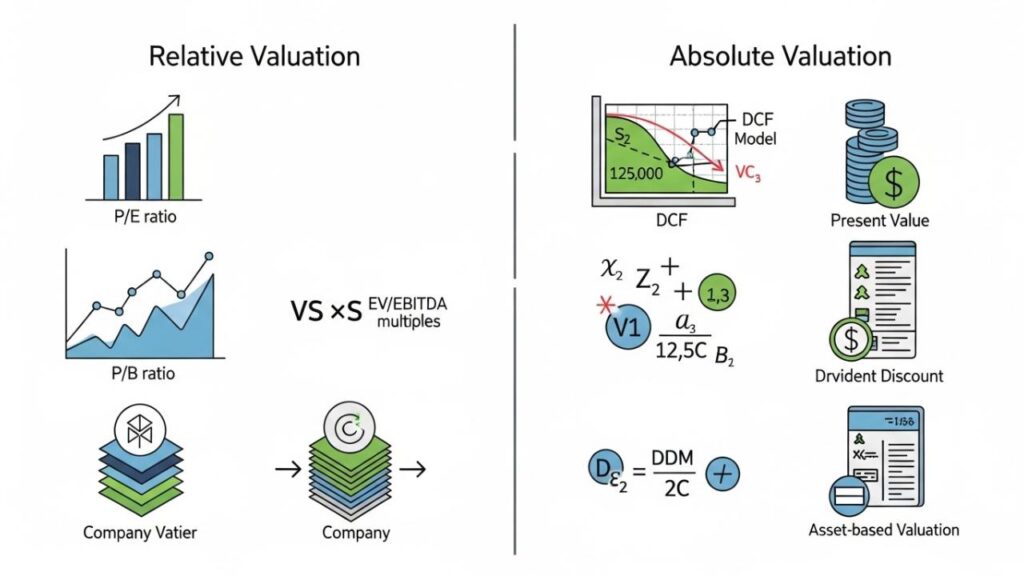
Stock evaluation is generally divided into two main categories: Relative Valuation and Absolute Valuation.
Relative Valuation (Multiples)
This approach compares a company to its industry peers or its own historical averages to see if it is “cheap” or “expensive” by comparison.
- Price-to-Earnings (P/E) Ratio: This measures the stock price relative to per-share earnings. It essentially tells you how much investors are willing to pay for every dollar of profit the company generates.
- Price-to-Book (P/B) Ratio: This compares the market price to the company’s net asset value (assets minus liabilities). It is particularly useful for asset-heavy industries like banking or manufacturing.
- Price-to-Sales (P/S) Ratio: This uses total revenue instead of profit. It is a go-to metric for early-stage companies that are growing fast but aren’t yet profitable.
- PEG Ratio: This divides the P/E ratio by the company’s expected growth rate. It helps determine if a high P/E is justified by rapid expansion or if the stock is simply overpriced.

Absolute Valuation (Intrinsic)
This approach ignores what competitors are doing and focuses solely on the company’s internal financial data.
- Discounted Cash Flow (DCF): This model calculates the present value of all future expected cash flows. It operates on the principle that a business is worth the sum of all the cash it will produce in the future, adjusted for the “time value of money.”
- Dividend Discount Model (DDM): This values a stock based on the present value of its future dividend payments. It is most effective for stable, “blue-chip” companies with long histories of returning cash to shareholders.
Key Features of a Healthy Company
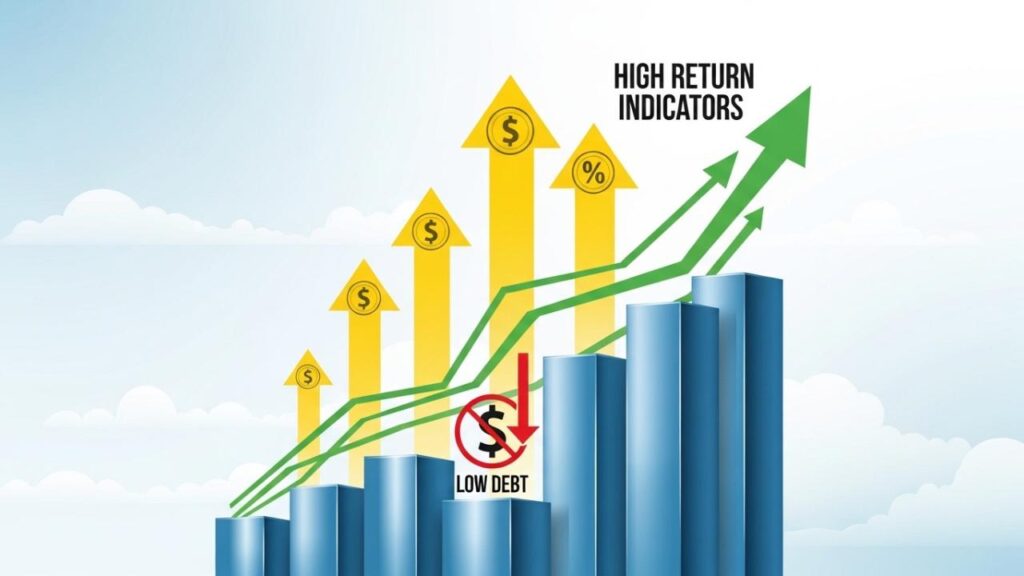
When conducting an evaluation, certain indicators often signal a robust and sustainable business model:
- Manageable Debt levels: A healthy balance sheet usually features low debt relative to shareholder equity. This ensures the company can survive economic downturns without facing a liquidity crisis.
- High Return on Equity (ROE): This measures how effectively management uses investors’ capital to generate profit. A consistently high ROE suggests an efficient and well-run operation.
- Positive Free Cash Flow: Unlike accounting earnings, which can involve non-cash items, free cash flow represents the actual cash available to the business after paying for operations and maintenance. This is the money used to pay dividends, buy back shares, or reinvest in growth.
Benefits of Rigorous Evaluation
The primary advantage of Stock valuation guide is the reduction of emotional bias. When the market becomes volatile and prices start to drop, investors who have performed a deep dive into a company’s fundamentals are less likely to panic. They understand the underlying value of their holdings, which provides clarity when other market participants are acting on fear.
Furthermore, evaluation is a critical tool for capital preservation. By identifying overvalued stocks, you can avoid the common mistake of “buying at the top” during a speculative bubble. It encourages a disciplined entry and exit strategy based on objective math rather than the fear of missing out (FOMO).
Risks, Drawbacks, and Limitations
While evaluation provides a logical framework, it is not a crystal ball. It carries several inherent risks that every investor must acknowledge:
- Reliance on Historical Data: Financial statements are a record of the past. A company’s past success does not guarantee future performance, especially in industries prone to rapid technological disruption.
- Subjective Projections: Models like the DCF rely heavily on assumptions about future growth. If your estimates are even slightly too optimistic, the resulting “intrinsic value” will be significantly inflated and misleading.
- Market Irrationality: A stock can remain undervalued or overvalued for a very long time. The market may not recognize a company’s “true” value as quickly as you expect, which can lead to your capital being tied up in a “dead” stock for years.
- Information Asymmetry: Despite public filings, individual investors may not always be aware of pending litigation, internal management friction, or shifts in consumer behavior until the damage is already done.
Who It May Be Suitable For
Stock valuation guide is well-suited for individuals who take a long-term approach to wealth building. It is a vital skill for “Value Investors” who enjoy the hunt for discounted assets and “Growth Investors” who want to ensure they aren’t overpaying for a company’s future potential. This process generally appeals to those who enjoy research, have a basic comfort level with mathematics, and possess the patience to wait for the right market conditions.
Who Should Be Cautious
Those seeking immediate profits or “get rich quick” schemes should be extremely cautious. Evaluation is a slow, methodical process that rarely predicts short-term price spikes. Additionally, if you find financial statements overwhelming or simply do not have the time to commit several hours of research to a single company, this hands-on approach may not be for you. Investors who prefer to follow social media trends or “hot tips” will likely find the disciplined nature of fundamental analysis too restrictive.
Alternatives to Individual Stock Evaluation
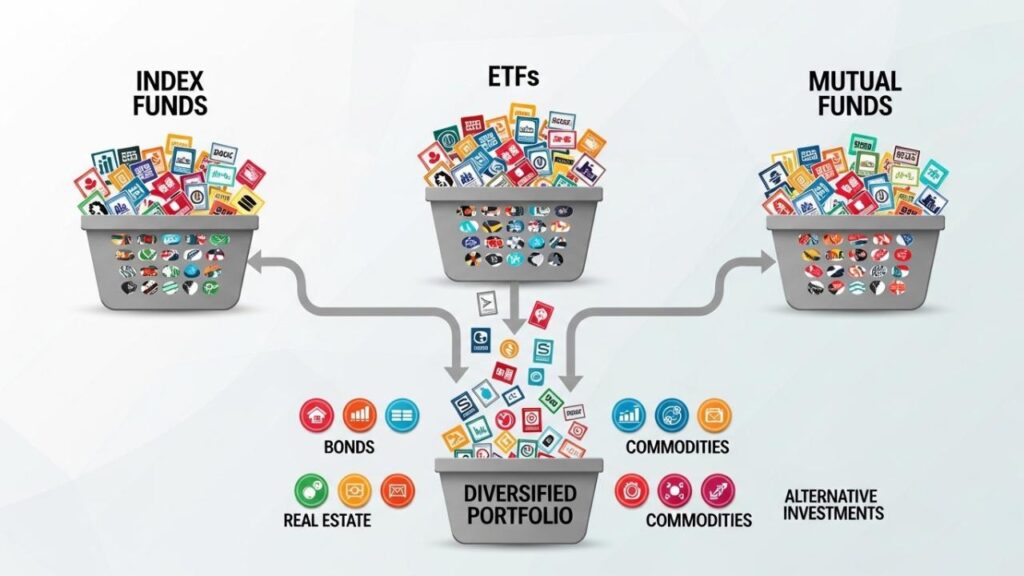
Analyzing individual companies is a significant commitment. If it doesn’t fit your lifestyle, there are several effective alternatives:
- Index Funds: These funds track a specific market index, such as the S&P 500. They provide instant diversification across hundreds of companies without requiring you to evaluate them individually.
- Exchange-Traded Funds (ETFs): Exchange-Traded Funds (ETFs): Similar to index funds, these allow you to buy a “basket” of stocks focused on specific sectors, like technology, healthcare, or energy. Investors looking for internationally diversified portfolios may also benefit from understanding What Is a Global Equity Fund? Beginner Guide before choosing broad market investments.
- Mutual Funds: These are professionally managed portfolios where a fund manager and a team of analysts handle the evaluation and selection process for you.
- Robo-Advisors: These automated platforms build and manage a diversified portfolio based on your personal risk tolerance and financial goals.
Frequently Asked Questions
1. How long does a proper evaluation actually take?
For someone just starting out, a thorough evaluation can take several days of reading and calculating. As you become familiar with financial statements, the process typically streamlines to about 2 to 5 hours per company.
2. Can I use the same evaluation method for every stock?
No. Different industries require different lenses. You wouldn’t value a bank (which is asset-heavy) the same way you would value a software company (which is driven by recurring revenue).
3. Is a low P/E ratio a guaranteed signal to buy?
Definitely not. A very low P/E ratio can sometimes be a “value trap.” This happens when a stock is cheap because the business is in permanent decline or facing massive legal troubles that the market has already priced in.
4. Where can I find the data needed for my research?
Public companies are required to file quarterly (10-Q) and annual (10-K) reports with the SEC. You can find these on the company’s “Investor Relations” website or through financial data platforms.
Conclusion
Evaluating a stock is an essential discipline for anyone looking to move beyond guesswork and toward informed participation in the financial markets. By combining quantitative metrics—like the P/E and PEG ratios—with a qualitative assessment of a company’s management and competitive standing, you can develop a much clearer picture of what a business is worth. While this process requires time, patience, and an acceptance of market risks, it remains one of the most effective ways to navigate the complexities of investing with objectivity and confidence.