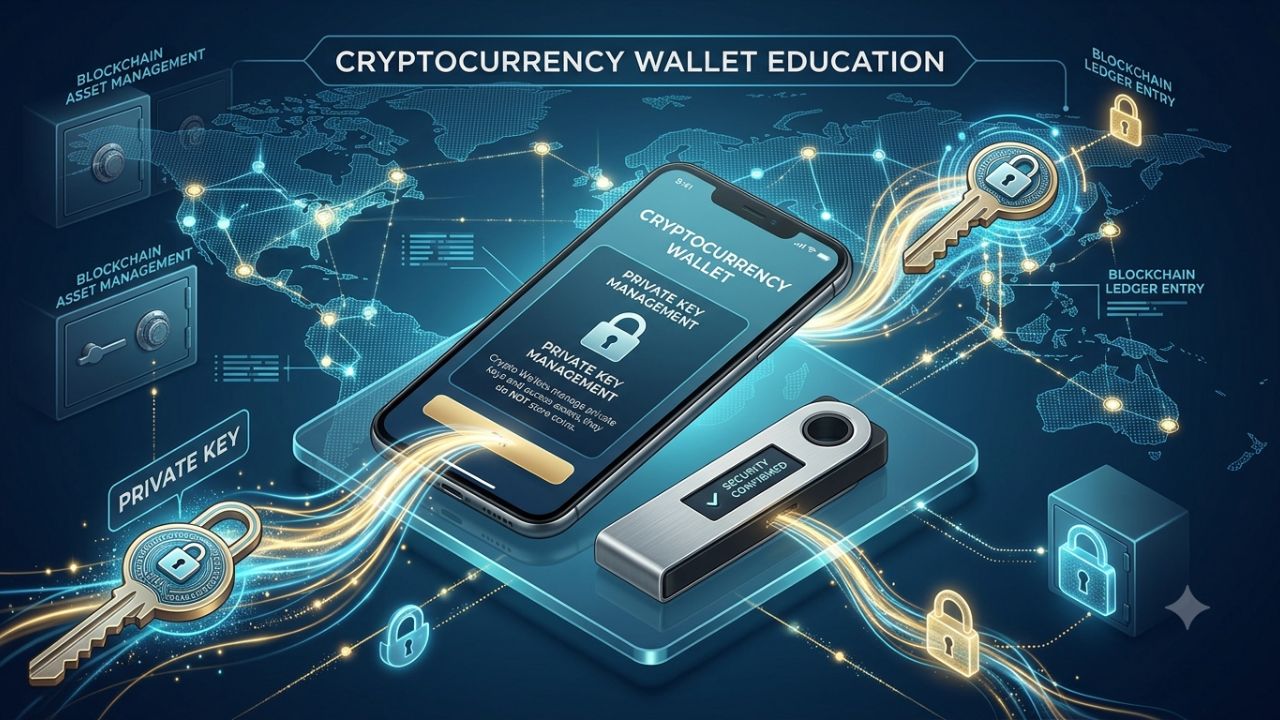

As cryptocurrencies such as Bitcoin and Ethereum have become more widely used, understanding how to securely manage digital assets has become increasingly important. One of the most fundamental concepts in cryptocurrency is the crypto wallet. Despite its name, a crypto wallet does not physically store digital coins. Instead, it securely manages the cryptographic keys that provide access to assets recorded on a blockchain. Like ATMs provide access to traditional banking services, crypto wallets provide access to blockchain assets. Learn more about financial access systems in How ATM Networks Work.
Choosing the right type of wallet can significantly affect both convenience and security. Some wallets prioritize quick access for everyday transactions, while others are designed to provide stronger protection for long-term storage. Understanding the differences between hot wallets, cold wallets, custodial wallets, and non-custodial wallets can help users make informed decisions based on their individual needs and risk tolerance.
What Is a Crypto Wallet?
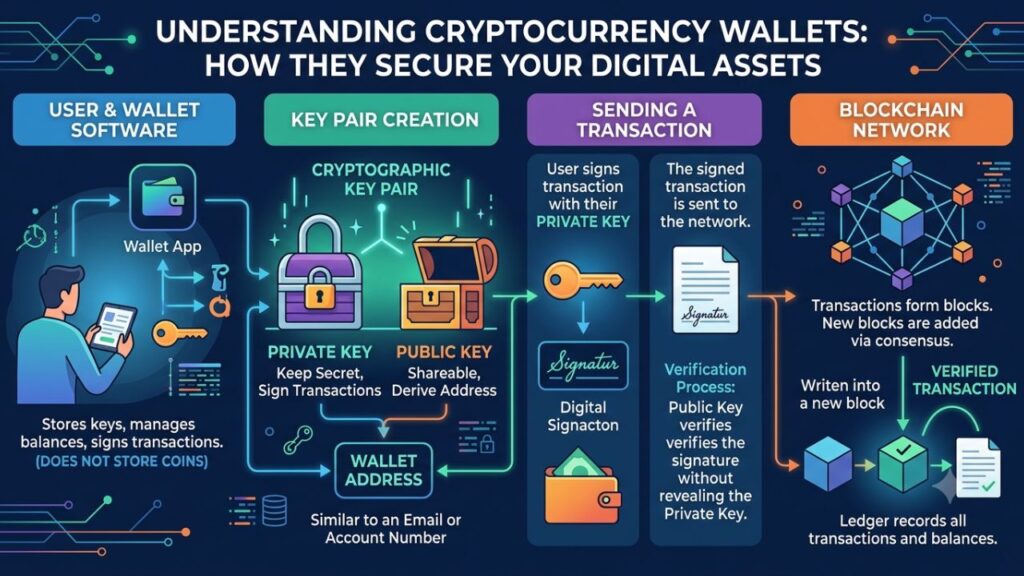
A crypto wallet is a software application or hardware device that stores the cryptographic keys required to access, manage, and transfer cryptocurrency. Rather than holding digital coins directly, a wallet serves as a secure interface that allows users to interact with blockchain networks.
Every cryptocurrency transaction is recorded on a decentralized blockchain. Ownership of those assets is determined by cryptographic keys rather than by the wallet itself. More technical details about cryptographic keys can be found in resources from National Institute of Standards The wallet simply provides a secure way to generate, store, and use those keys.
Two essential components exist in every crypto wallet:
- Public Key: Similar to a bank account number or email address, the public key generates a wallet address that can be shared with others to receive cryptocurrency.
- Private Key: Comparable to an online banking password or digital signature, the private key authorizes transactions. It must remain confidential because anyone with access to it can control the associated cryptocurrency.
How It Works
A crypto wallet operates by managing cryptographic keys and communicating with blockchain networks. The process generally works as follows:
- A wallet generates cryptographic keys. During setup, the wallet creates a unique public key and private key.
- The public key creates a wallet address. This address can be shared to receive cryptocurrency from other users.
- Transactions are initiated. When sending cryptocurrency, the wallet digitally signs the transaction using the private key.
- The blockchain verifies the signature. Network participants confirm that the transaction is valid without revealing the private key.
- The transaction is recorded. Once verified, the blockchain updates ownership records accordingly.
Most wallets also generate a recovery or backup phrase, often called a seed phrase. This phrase can restore access to the wallet if the original device is lost or damaged. Because it provides access to the wallet, it should be stored securely and never shared with others.
Key Features or Core Components
Crypto wallets vary in design, but most include several common features.
Public and Private Keys
The foundation of every wallet is its pair of cryptographic keys. The public key allows others to send cryptocurrency, while the private key authorizes spending and transfers.
Recovery Phrase
Most non-custodial wallets generate a backup phrase consisting of multiple words. This phrase allows users to recover their wallet if the original device becomes unavailable.
Wallet Types
Crypto wallets are generally divided into two main categories:
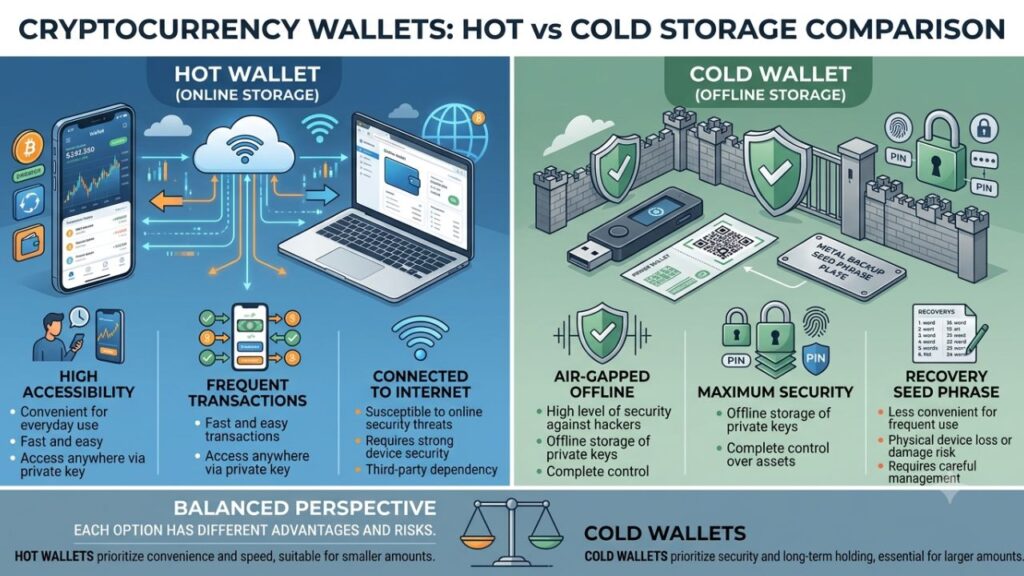
Hot Wallets (Software Wallets)
Hot wallets are connected to the internet and are available as mobile apps, desktop applications, or browser extensions. They offer quick access to digital assets and are commonly used for everyday transactions and decentralized applications (Apps).
Popular examples include:
- MetaMask (primarily for Ethereum-compatible networks)
- Phantom (primarily for Solana)
- Trust Wallet
Cold Wallets (Hardware Wallets)
Cold wallets store private keys offline using dedicated hardware devices. Because they remain disconnected from the internet except during specific transactions, they reduce exposure to many online security threats.
Popular examples include:
- Ledger hardware wallets
- Trezor hardware wallets
Custodial vs. Non-Custodial Wallets
Wallets can also be classified based on who controls the private keys.
Non-Custodial (Self-Custody)
With a non-custodial wallet, the user alone controls the private keys. This provides complete ownership and independence but also places full responsibility for security and backups on the user. If the recovery phrase is permanently lost, the assets generally cannot be recovered.
Custodial
In a custodial wallet, a third-party service—such as a centralized cryptocurrency exchange—holds the private keys on behalf of the user. Password recovery is typically easier, but users depend on the service provider for access to their funds.
Benefits or Advantages
Crypto wallets offer several practical benefits when used appropriately.
Ownership and Control
Non-custodial wallets allow users to directly control their digital assets without relying on an intermediary.
Secure Asset Management
Hardware wallets, in particular, provide strong protection by keeping private keys offline, reducing exposure to many forms of cyberattack.
Convenient Transactions
Software wallets make it easy to send, receive, and monitor cryptocurrency using computers or mobile devices.
Compatibility with Blockchain Applications
Many hot wallets can connect directly to decentralized finance (DeFi) platforms, NFT marketplaces, blockchain games, and other decentralized applications.
Multiple Cryptocurrency Support
Many modern wallets support numerous blockchain networks and digital assets, allowing users to manage different cryptocurrencies within a single interface.
Risks, Drawbacks, or Limitations
Although crypto wallets provide important security features, they also involve risks that users should understand.
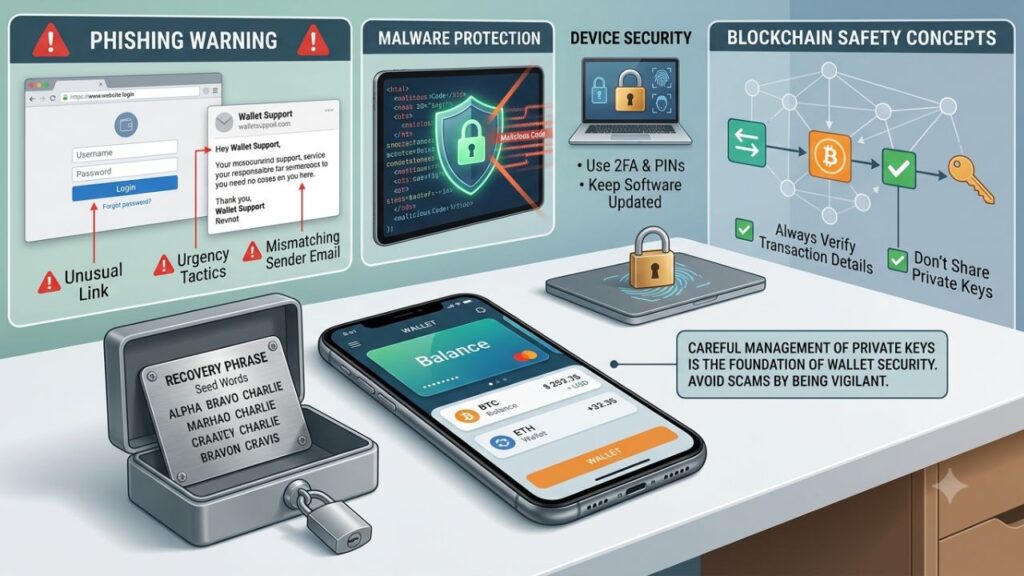
Loss of Recovery Phrase
For non-custodial wallets, losing the recovery phrase may result in permanent loss of access to the associated cryptocurrency.
Security Threats
Hot wallets remain connected to the internet, making them more vulnerable to malware, phishing attacks, compromised devices, and malicious browser extensions compared to offline wallets. Online financial services also face similar security challenges, making cybersecurity awareness important across both traditional banking and cryptocurrency platforms. Readers interested in learning more about protecting online financial accounts can explore WebWise Banking Security Guide which discusses digital banking features and online security considerations.
User Responsibility
Self-custody requires users to understand basic security practices, including protecting private keys, verifying wallet addresses, and avoiding scams.
Hardware Costs
Cold wallets typically require purchasing a dedicated hardware device, which may not be necessary for users holding only small amounts of cryptocurrency.
Third-Party Risk
Custodial wallets depend on the security, operational stability, and policies of the service provider. If the provider experiences technical issues, regulatory restrictions, or security incidents, users may temporarily lose access to their assets.
Limited Recovery Options
Unlike traditional banking systems, cryptocurrency transactions are generally irreversible. Mistaken transfers or compromised private keys often cannot be reversed.
Who It May Be Suitable For
Different wallet types serve different needs.
A hot wallet may be suitable for:
- Users making frequent cryptocurrency transactions
- Individuals interacting with decentralized applications
- Beginners who prioritize convenience and accessibility
A cold wallet may be suitable for:
- Long-term cryptocurrency holders
- Users storing larger amounts of digital assets
- Individuals seeking stronger protection against online threats
A custodial wallet may be appropriate for users who prefer simplified account management and password recovery, while a non-custodial wallet may suit users who want direct control over their private keys.
Who Should Be Cautious or Avoid It
Certain users should carefully consider the responsibilities associated with cryptocurrency wallets.
People unfamiliar with digital security practices may find non-custodial wallets challenging, particularly if they are uncomfortable managing recovery phrases.
Users who are unable to securely store backup information should recognize that losing access credentials may permanently prevent access to their cryptocurrency.
Individuals expecting the same consumer protections available with traditional bank accounts may also need to understand that cryptocurrency transactions and wallet recovery processes often operate under different rules.
Alternatives or Related Options
Several alternatives exist depending on how users wish to manage digital assets.
Centralized Exchange Accounts
Some people keep cryptocurrency directly on a regulated exchange using the platform’s custodial wallet. This simplifies account recovery but places asset control with the provider.
Paper Wallets
A paper wallet stores public and private keys in printed form. While entirely offline, paper wallets require careful handling because physical damage or loss may permanently destroy access.
Multi-Signature Wallets
These wallets require approval from multiple private keys before transactions can be completed, providing additional security for organizations or shared accounts.
Institutional Custody Services
Businesses and institutional investors may use professional custody providers that specialize in secure cryptocurrency storage and compliance.
Frequently Asked Questions
1. Does a crypto wallet actually store cryptocurrency?
No. Cryptocurrency remains recorded on the blockchain. The wallet stores the cryptographic keys that allow you to access and manage those assets.
2. Which is more secure: a hot wallet or a cold wallet?
Cold wallets generally provide stronger protection because private keys remain offline. Hot wallets offer greater convenience but have more exposure to internet-based security risks.
3. What happens if I lose my recovery phrase?
For most non-custodial wallets, losing both the recovery phrase and access to the wallet device may result in permanent loss of access to your cryptocurrency.
4. Can I use more than one crypto wallet?
Yes. Many users maintain multiple wallets for different purposes, such as using a hot wallet for everyday transactions and a cold wallet for long-term storage.
5. What is the difference between custodial and non-custodial wallets?
A custodial wallet is managed by a third party that controls the private keys. A non-custodial wallet gives the user direct ownership and responsibility for securing those keys.
Conclusion
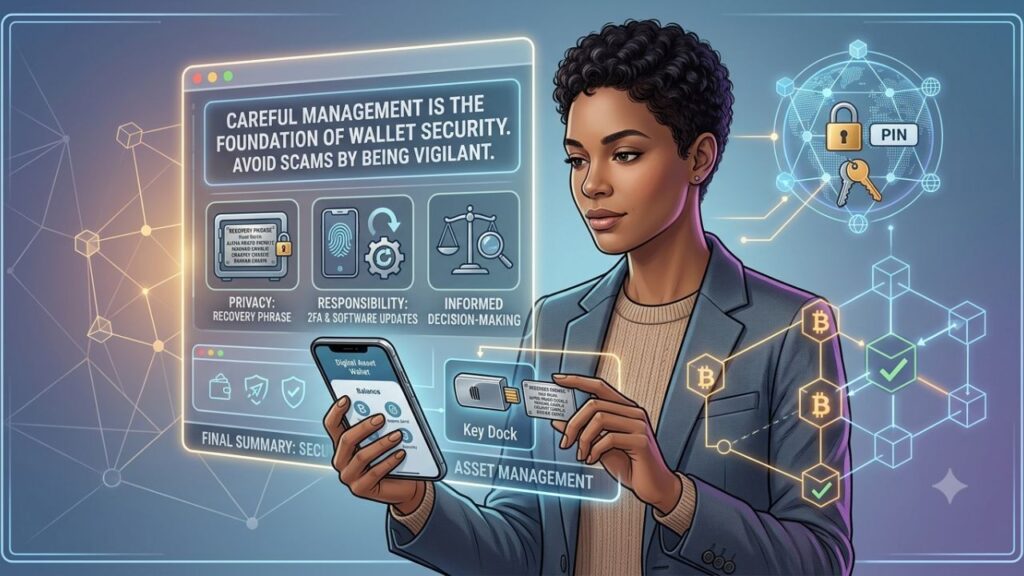
A crypto wallet is an essential tool for accessing and managing digital assets on a blockchain. Rather than storing cryptocurrency itself, it protects the cryptographic keys that establish ownership and authorize transactions. Understanding the differences between hot wallets and cold wallets, as well as custodial and non-custodial models, can help users choose an approach that aligns with their security needs, technical experience, and intended use. While crypto wallets provide flexibility and direct access to blockchain networks, they also require careful attention to security practices and key management. A clear understanding of these concepts is an important part of responsible cryptocurrency use.