
Cryptocurrency is a type of digital asset designed to be transferred, stored, and verified electronically without relying on a central bank or government. Instead, it uses cryptography and a decentralized network of computers to process transactions and maintain records. These transactions are stored on a blockchain, a shared digital ledger that is designed to be transparent and difficult to alter.
Over the past decade, cryptocurrencies have become more widely discussed by investors, businesses, policymakers, and technology companies. While some people view them as an alternative form of money, others use them for online payments, decentralized applications, or as part of a diversified investment portfolio. Understanding the basics of cryptocurrency can help beginners make informed decisions, recognize potential risks, and better understand how this technology fits into the broader financial system.
What Is Cryptocurrency?
Cryptocurrency is a decentralized digital asset that uses cryptographic technology to secure transactions and verify ownership. Unlike traditional currencies such as the U.S. Dollar (USD) or Euro (EUR), cryptocurrencies generally operate without a central authority controlling their issuance or transactions.
Most cryptocurrencies run on a blockchain, which is a distributed digital ledger shared across many computers. Every transaction is recorded chronologically and verified by the network, making the records transparent and resistant to unauthorized changes.
Some commonly used cryptocurrency terms include:
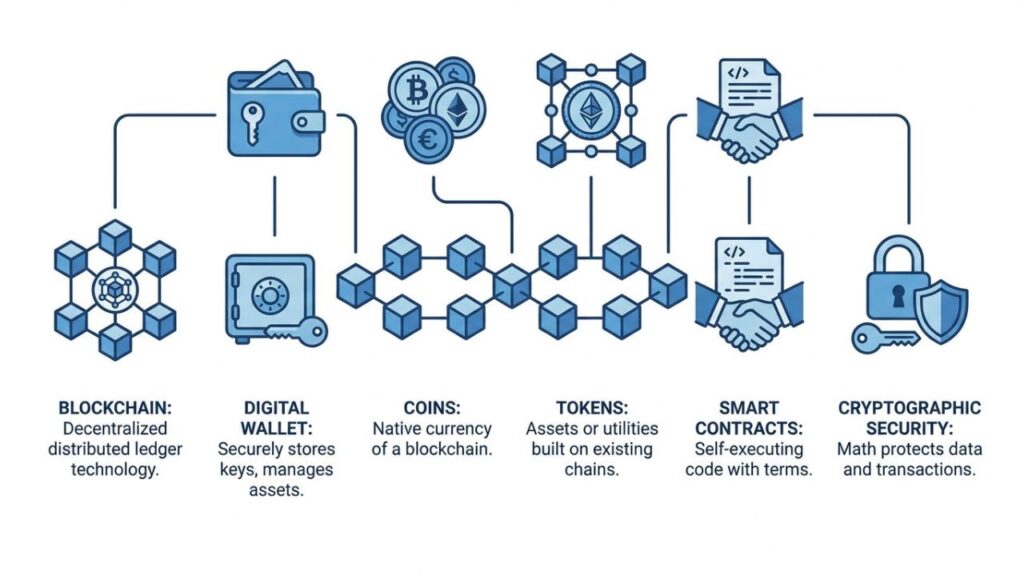
- Blockchain: A public digital ledger that securely records transactions across a decentralized network.
- Coins: Cryptocurrencies with their own blockchain, such as Bitcoin and Ethereum.
- Tokens: Digital assets created on an existing blockchain, such as many ERC-20 tokens built on Ethereum.
- Fiat Currency: Government-issued money, including the U.S. Dollar, Euro, and British Pound.
- Stablecoins: Cryptocurrencies designed to maintain a relatively stable value by being linked to assets such as the U.S. Dollar. Examples include USDC and USDT.
Readers who want to learn additional cryptocurrency terminology can refer to the CoinMarketCap Cryptocurrency Glossary, which explains many commonly used blockchain and digital asset terms in plain language.
How It Works
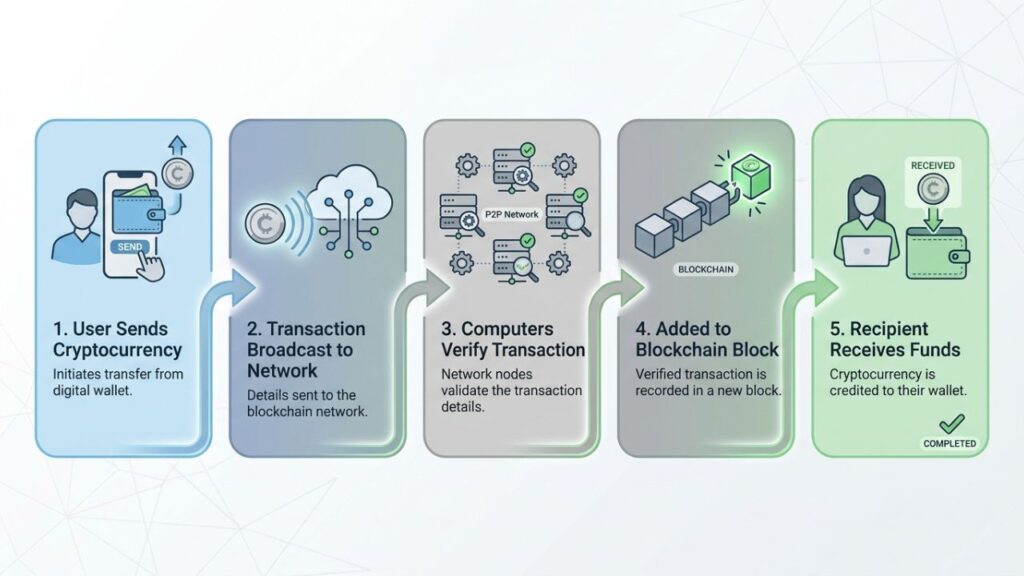
Although cryptocurrency technology can seem complex, the basic process is relatively straightforward.
- A user creates a transaction. This may involve sending cryptocurrency to another person or purchasing digital assets on an exchange.
- The transaction is broadcast to the network. Computers participating in the blockchain network receive the transaction information.
- The network verifies the transaction. Depending on the blockchain, different consensus mechanisms are used to confirm that the transaction is valid.
- The verified transaction is added to the blockchain. Once approved, it becomes part of the permanent digital ledger.
- Ownership records are updated. The recipient gains control of the cryptocurrency, while the blockchain maintains a permanent record of the transfer.
Because multiple computers maintain copies of the blockchain, there is no single central database responsible for recording transactions.
Key Features or Core Components
Several characteristics distinguish cryptocurrency from traditional financial systems.
Decentralization
Most cryptocurrencies operate through distributed computer networks rather than centralized financial institutions. This means no single organization controls the entire network.
Blockchain Technology
Blockchain serves as the foundation for most cryptocurrencies by creating a chronological, transparent, and tamper-resistant record of transactions.
Cryptographic Security
Advanced cryptography protects wallet ownership, transaction verification, and network integrity.
Digital Wallets
Cryptocurrency is stored in digital wallets rather than traditional bank accounts. Wallets manage the private keys that allow owners to access and transfer their assets.
Smart Contracts
Some blockchain networks, particularly Ethereum, support smart contracts. These are self-executing programs that automatically perform actions when predefined conditions are met.
Benefits or Advantages
Cryptocurrency offers several potential benefits, although these advantages vary depending on the specific asset and how it is used.
Global Accessibility
Anyone with internet access and a compatible wallet can generally send or receive cryptocurrency without needing a traditional bank account.
Fast International Transfers
Cross-border transactions may be completed more efficiently than some traditional payment systems, particularly when sending funds internationally.
Transparency
Public blockchains allow users to verify transactions through an open ledger, increasing transparency while maintaining pseudonymous addresses.
User Control
Individuals who manage their own wallets control their private keys rather than relying entirely on a financial institution to hold their assets.
Innovation
Blockchain technology supports applications beyond digital payments, including decentralized finance (DeFi), digital collectibles, supply chain tracking, and tokenized assets.
Risks, Drawbacks, or Limitations
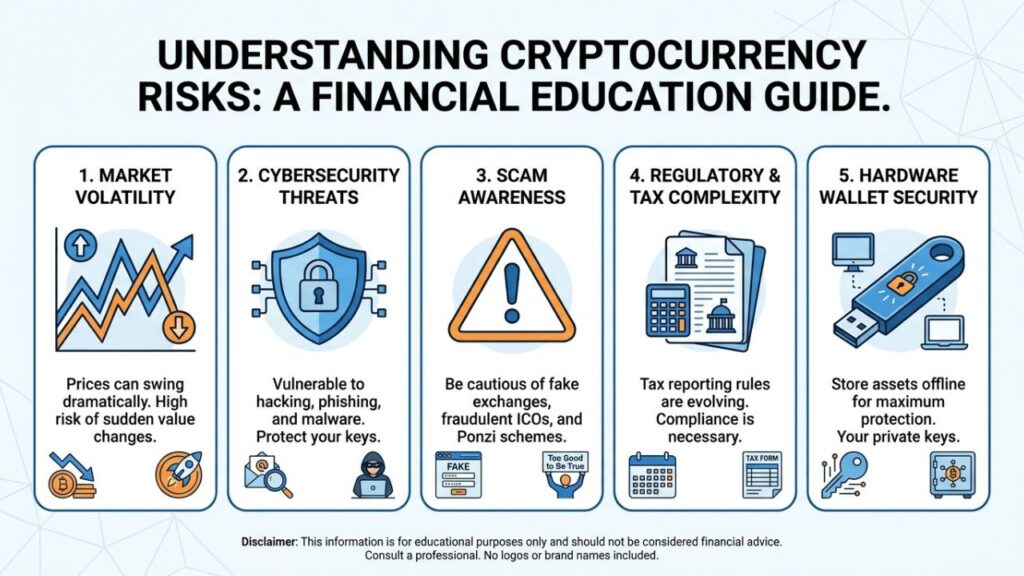
Cryptocurrency also carries meaningful risks that beginners should understand before buying or using digital assets.
High Price Volatility
Many cryptocurrencies experience significant price fluctuations over short periods. Market values can rise or fall rapidly, making them unsuitable for individuals who cannot tolerate substantial losses.
Security Risks
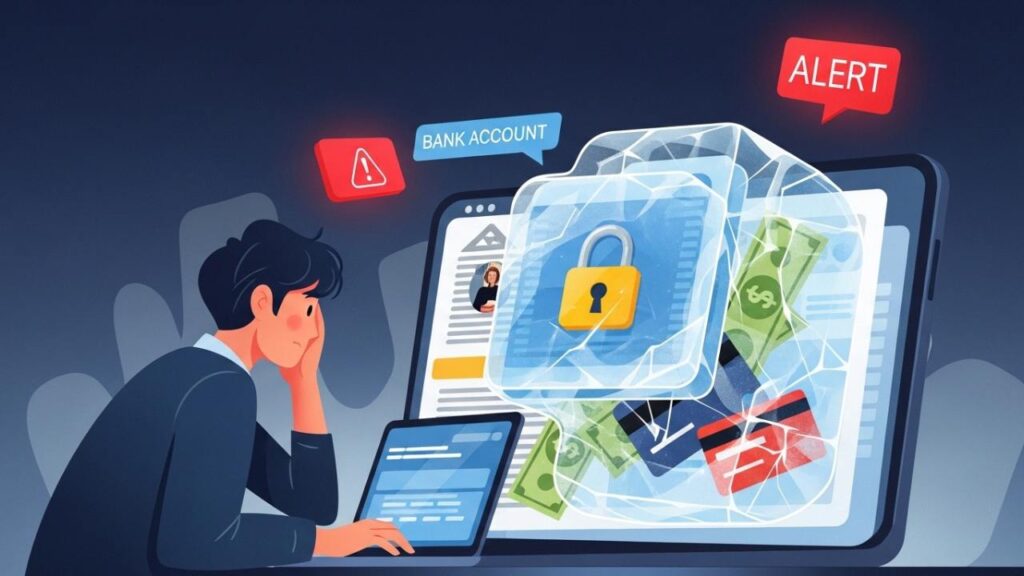
Although blockchain technology is highly secure, individual users may still lose funds through phishing attacks, hacked accounts, malware, or poor security practices.
Wallet Responsibility
If users control their own wallets, they are responsible for safeguarding their private keys and seed phrases. Losing a seed phrase may result in permanent loss of access to the cryptocurrency.
Hot wallets, such as Trust Wallet and MetaMask, offer convenience but remain connected to the internet, increasing exposure to online threats. Cold wallets, including hardware devices such as Ledger and Trezor, store keys offline and generally provide stronger protection against remote attacks.
Regulatory Uncertainty
Cryptocurrency regulations continue to evolve in many countries. Rules regarding trading, taxation, reporting, and consumer protections may change over time.
Tax Considerations
In many jurisdictions, cryptocurrency transactions may trigger tax obligations. Buying, selling, trading, or exchanging one cryptocurrency for another can create taxable events depending on local laws.
Scams and Fraud
Fraudulent investment schemes, fake tokens, phishing websites, and impersonation scams remain common. Careful research and skepticism are important when evaluating unfamiliar projects.
Who It May Be Suitable For
Cryptocurrency may be appropriate for people who:
- I want to learn about blockchain technology and digital assets.
- Understand that cryptocurrency involves financial risk.
- Can tolerate market volatility.
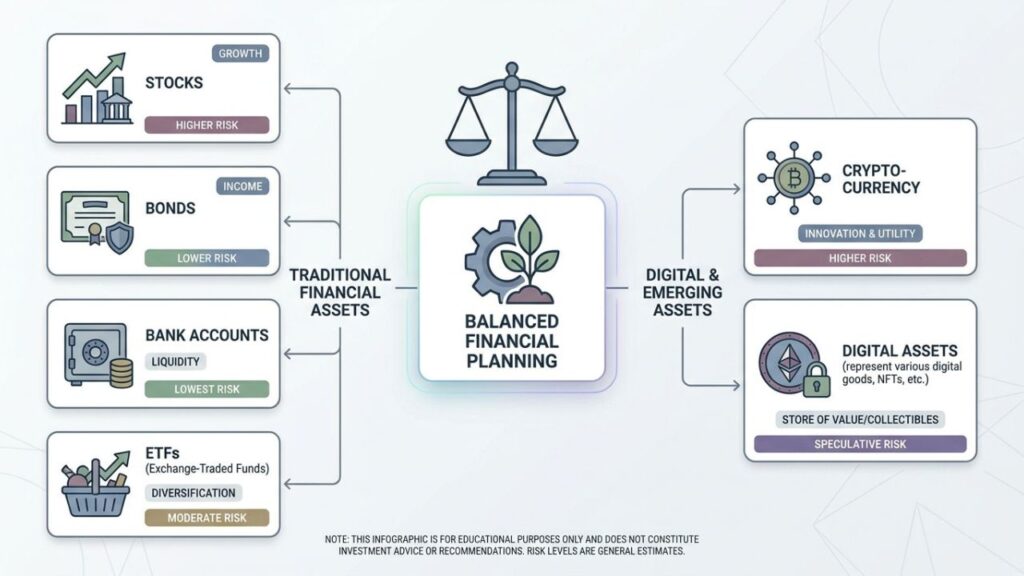
- Are interested in diversifying investments within their overall financial plan. Understanding Asset Allocation for Beginners can help explain how cryptocurrency may fit alongside other asset classes within a balanced investment portfolio rather than becoming the entire portfolio.
- Are willing to spend time learning about wallet security and safe storage practices.
Many beginners choose established cryptocurrencies with longer operating histories and greater market liquidity, such as Bitcoin, Ethereum, or widely used stablecoins like USDC and USDT, before exploring more specialized digital assets.
Who Should Be Cautious or Avoid It
Cryptocurrency may not be appropriate for everyone.
Individuals should be especially cautious if they:
- Need guaranteed returns or stable investment values.
- Cannot afford to lose part or all of the money invested.
- Are uncomfortable managing digital wallets and security responsibilities.
- Make investment decisions primarily based on social media trends or online hype.
- Do not have an emergency savings fund or sufficient financial stability.
New investors should also recognize that even well-established cryptocurrencies carry investment risk.
Alternatives or Related Options
People interested in digital finance may also consider other options depending on their goals.
- Traditional bank accounts provide regulated savings and payment services.
- Stock market investments offer ownership in publicly traded companies.
- Diversified investment funds may offer broader exposure to financial markets with lower concentration risk than holding a single digital asset. Global Equity Fund Guide explains how global stock funds differ from cryptocurrency investments and how they fit into long-term investing.
- Government bonds generally focus on capital preservation and income.
- Digital payment services offer electronic transfers without using cryptocurrency.
- Central Bank Digital Currencies (CBDCs) are government-issued digital currencies being researched or introduced in some countries.
Each option has different levels of risk, regulation, liquidity, and intended use.
Frequently Asked Questions
1. What is the difference between Bitcoin and Ethereum?
Bitcoin was primarily designed as a decentralized digital currency and store of value. Ethereum is a blockchain platform that also supports smart contracts and decentralized applications in addition to its native cryptocurrency, Ether (ETH).
2. What is a stablecoin?
A stablecoin is a cryptocurrency designed to maintain a relatively stable value by being linked to another asset, most commonly the U.S. Dollar. Examples include USDC and USDT.
3. How do beginners buy cryptocurrency?
A typical process includes selecting a reputable cryptocurrency exchange, completing identity verification (KYC), linking a payment method, depositing funds, and purchasing a supported cryptocurrency such as Bitcoin or Ethereum.
4. Is cryptocurrency stored in a bank account?
No. Cryptocurrency is generally held in digital wallets or custodial accounts provided by cryptocurrency exchanges rather than traditional bank accounts.
5. What is dollar-cost averaging (DCA)?
Dollar-cost averaging is an investment strategy where a fixed amount of money is invested at regular intervals, regardless of market prices. This approach can reduce the impact of short-term market fluctuations but does not eliminate investment risk.
Conclusion
Cryptocurrency is a digital asset that operates through decentralized blockchain networks rather than traditional financial institutions. It combines cryptographic security, distributed record-keeping, and digital ownership to enable electronic transactions and support a growing range of financial and technological applications.
For beginners, understanding concepts such as blockchain, digital wallets, stablecoins, and security practices provides a strong foundation before using or investing in cryptocurrency. While digital assets offer potential advantages, they also involve meaningful risks, including market volatility, security responsibilities, and changing regulations. A balanced understanding of both the opportunities and limitations can help individuals make informed financial decisions based on their own circumstances and risk tolerance.