The Loan-to-Value (LTV) ratio is one of the most important measurements used in mortgage lending and other secured loans. It compares the amount you plan to borrow with the value of the property or asset that serves as collateral. Lenders rely on this ratio to evaluate lending risk because it helps indicate how much equity a borrower has invested in the purchase.
Understanding how LTV works can help borrowers estimate their eligibility for different loan programs, anticipate insurance requirements, and understand how loan terms may be affected. Whether you are purchasing a home, refinancing an existing mortgage, or exploring other types of secured financing, knowing how to calculate and interpret your LTV ratio can help you make more informed financial decisions.
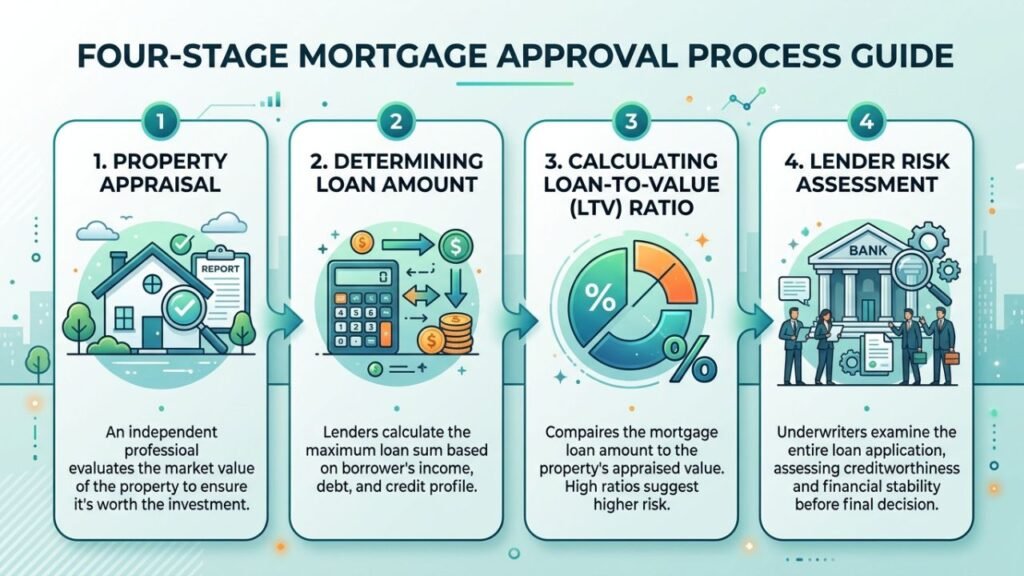
What Is a Loan-to-Value (LTV) Ratio?
A Loan-to-Value (LTV) ratio is the percentage of a property’s value that is financed through a loan. It is calculated by dividing the loan amount by the lower of the property’s appraised value or purchase price, then multiplying the result by 100. For additional guidance on mortgages, loan costs, and borrower protections, readers can explore resources provided by the Consumer Financial Protection.
The formula is:
LTV Ratio = (Loan Amount ÷ Lesser of Appraised Value or Purchase Price) × 100
For example:
- Property purchase price: $300,000
- Appraised value: $300,000
- Down payment: $60,000
- Loan amount: $240,000
Calculation:
- $240,000 ÷ $300,000 = 0.80
- 0.80 × 100 = 80% LTV
An 80% LTV means the lender is financing 80% of the property’s value, while the borrower contributes the remaining 20% as equity through the down payment.
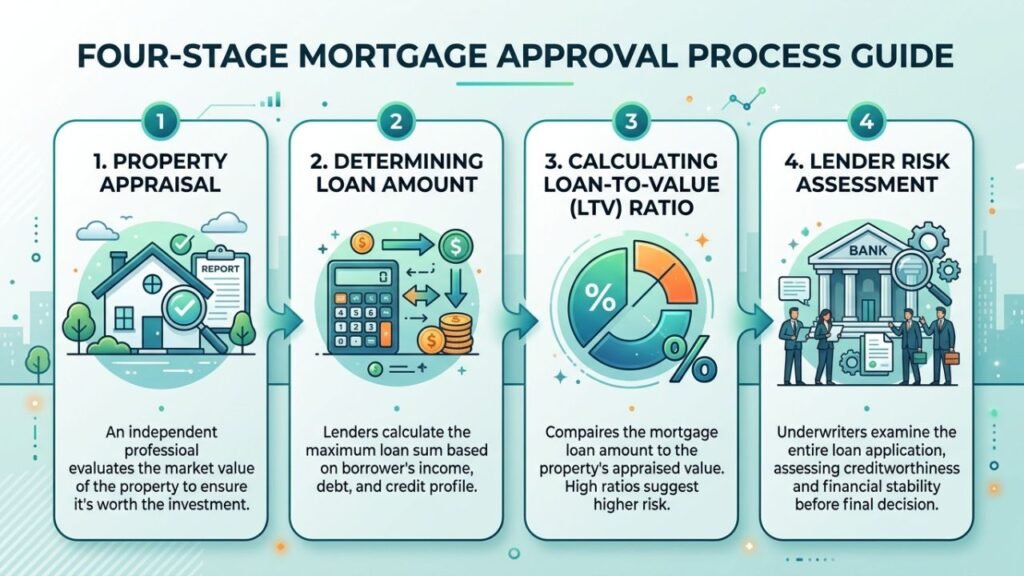
How It Works
LTV is calculated during the mortgage approval process and may also be reviewed when refinancing or obtaining other secured loans.
Step 1: Determine the Property Value
The lender uses the lower of:
- The agreed purchase price, or
- The property’s appraised market value.
Using the lower figure helps reduce lending risk if a property is purchased above its appraised value.
Step 2: Calculate the Loan Amount
Subtract your down payment from the purchase price to determine how much financing is required.
Example:
- Property value: $300,000
- Down payment: $60,000
- Loan amount: $240,000
Step 3: Calculate the LTV Ratio
Divide the loan amount by the property’s qualifying value.
Example:
$240,000 ÷ $300,000 = 0.80
Multiply by 100 to convert the result into a percentage.
Final LTV:
80%
Step 4: Lender Reviews the Result
The lender compares your LTV ratio with its lending guidelines. A lower LTV generally represents lower lending risk, while a higher LTV may require additional insurance, stricter underwriting, or different loan pricing.
Key Features or Core Components
Several factors influence an LTV ratio and how lenders interpret it.
Loan Amount
The larger the loan compared to the property’s value, the higher the LTV ratio.
Property Value
A professional appraisal helps determine the property’s market value. If the appraisal is lower than the purchase price, the lender typically uses the lower figure when calculating LTV.
Down Payment
A larger down payment reduces the loan amount, resulting in a lower LTV ratio.
Equity
Equity represents the portion of the property that the borrower owns outright. It is generally the opposite of the LTV percentage.
For example:
- 80% LTV = 20% equity
- 90% LTV = 10% equity
Loan Program Requirements
Different mortgage programs establish different maximum LTV limits depending on borrower qualifications and the type of financing.
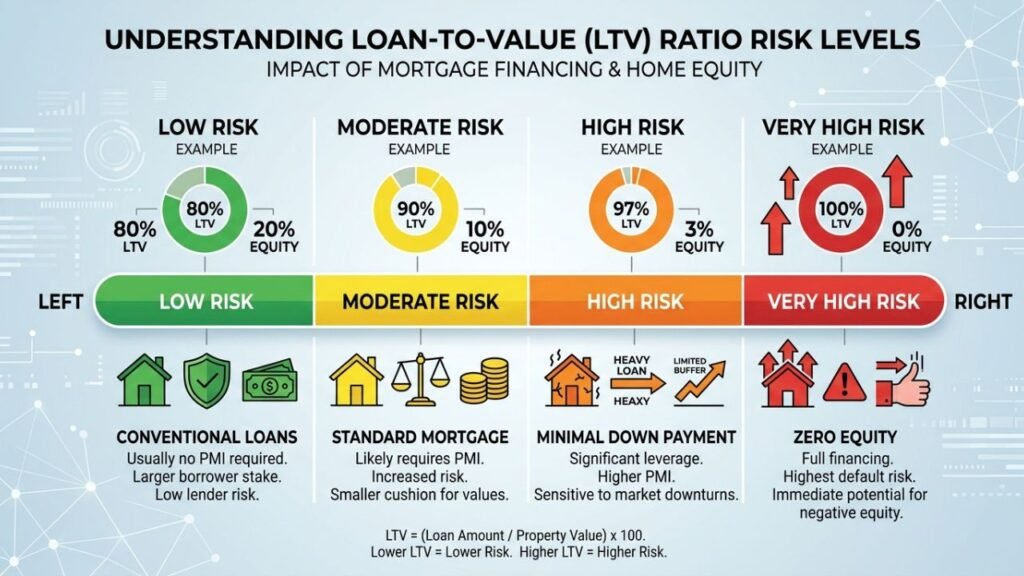
Common LTV Thresholds
| LTV Ratio | Risk Level | Typical Down Payment | Common Financial Implications |
| 80% or lower | Low | 20% or more | Often qualifies for more favorable interest rates and may avoid Private Mortgage Insurance (PMI) on conventional loans. |
| 81% to 95% | Moderate | 5% to 19% | May require PMI and involve stricter credit evaluation. |
| 96.5% to 97% | High | 3% to 3.5% | Common for certain FHA loans and some first-time homebuyer conventional programs. |
| 100% | Very High | 0% | Typically limited to specific government-backed loan programs, such as certain VA or USDA loans, subject to eligibility requirements. |
Benefits or Advantages
Understanding LTV provides several practical benefits.
Better Understanding of Borrowing Costs
Lower LTV ratios often qualify borrowers for more favorable loan terms because they represent less risk to lenders.
Awareness of Mortgage Insurance Requirements
For conventional mortgages, borrowers with an LTV above 80% commonly pay Private Mortgage Insurance (PMI). Understanding your LTV helps estimate whether this additional cost may apply.
Stronger Equity Position
Lower LTV means more ownership in the property from the beginning. This equity can provide a financial cushion if property values decline.
Improved Financial Planning
Knowing your target LTV can help you decide how much to save for a down payment before purchasing a home.
Easier Loan Comparisons
Comparing loan offers becomes more meaningful when you understand how LTV affects interest rates, insurance requirements, and approval standards.
Risks, Drawbacks, or Limitations
Although LTV is an important financial measure, it also has limitations.
Higher LTV Can Increase Borrowing Costs
Borrowers with higher LTV ratios may pay higher interest rates, mortgage insurance premiums, or additional fees depending on the loan program.
Limited Equity
A high LTV means the borrower owns a smaller share of the property. This can reduce financial flexibility if the property must be sold soon after purchase.
Greater Exposure to Market Declines
If property values fall significantly, homeowners with high LTV ratios may owe more than the property’s market value. This situation is commonly referred to as being “underwater” on a mortgage.
Appraisal Differences
An unexpectedly low appraisal can increase the calculated LTV, even if the agreed purchase price remains unchanged. This may affect loan approval or require a larger down payment.
LTV Is Only One Approval Factor
A favorable LTV does not guarantee loan approval. Lenders also evaluate credit history, income, employment stability, debt-to-income ratio, available assets, and other underwriting criteria.
Who It May Be Suitable For
Understanding LTV is valuable for many types of borrowers, including:
- First-time homebuyers preparing for a mortgage application.
- Existing homeowners considering refinancing.
- Individuals purchasing investment or rental properties.
- Borrowers comparing different loan options.
- Anyone planning how much to save for a down payment.
Financial professionals, real estate agents, and property investors also frequently use LTV when evaluating financing options.
Who Should Be Cautious or Avoid It
While everyone can benefit from understanding LTV, borrowers should exercise caution when relying on it as the only measure of affordability.
Extra care may be appropriate for:
- Buyers stretching their budget with minimal down payments.
- Borrowers with unstable income or significant existing debt.
- Individuals assuming that low LTV alone guarantees favorable loan terms.
- Homebuyers purchasing in markets experiencing significant price volatility.
Evaluating monthly affordability alongside LTV provides a more complete picture of borrowing capacity.
Alternatives or Related Options
LTV is often considered alongside other financial measurements rather than used by itself.
Debt-to-Income (DTI) Ratio
DTI measures monthly debt payments compared with monthly income. Lenders commonly review both DTI and LTV during mortgage underwriting.
Combined Loan-to-Value (CLTV)
CLTV includes all loans secured by the property, such as a primary mortgage and a home equity loan or line of credit. Some homeowners use home equity loans or other secured financing to consolidate existing debts. Before considering this strategy, read How Debt Consolidation Works to understand both the potential benefits and the financial risks involved.
Home Equity
Home equity represents the portion of the property’s value owned by the borrower. As mortgage balances decrease or property values increase, equity generally grows.
Loan Program Comparisons
Different loan programs—including conventional, FHA, VA, and USDA loans—may have different maximum LTV limits, insurance requirements, and eligibility criteria.
Frequently Asked Questions
1. What is considered a good LTV ratio?
Many conventional lenders view an LTV of 80% or lower as a favorable level because it generally represents lower lending risk and may eliminate the need for Private Mortgage Insurance (PMI).
2. Can my LTV ratio change over time?
Yes. As you repay your mortgage or if your property’s market value changes, your LTV ratio will also change.
3. Is a higher down payment always helpful?
A larger down payment generally lowers your LTV ratio, increases your initial equity, and may improve available loan terms. However, borrowers should also consider maintaining sufficient emergency savings rather than using all available cash for a down payment.
4. Does refinancing require a new LTV calculation?
In many cases, yes. Refinancing typically involves a new review of your property’s value and outstanding loan balance to determine the current LTV ratio.
5. Is LTV the same as home equity?
No. They are closely related but represent opposite concepts. LTV measures the financed portion of the property’s value, while equity measures the portion you own. Together they generally total 100%.
Conclusion
The Loan-to-Value (LTV) ratio is a fundamental measurement in mortgage and secured lending that compares the size of a loan with the value of the property securing it. It plays a significant role in determining lending risk, interest rates, mortgage insurance requirements, and loan eligibility.
A lower LTV generally reflects greater borrower equity and may lead to more favorable borrowing terms, while a higher LTV can increase costs and reduce financial flexibility. Although LTV is an important consideration, it is only one part of the lending process. Borrowers should also consider factors such as affordability, debt obligations, credit history, and long-term financial goals when evaluating financing options.