A stablecoin is a cryptocurrency with an. Unlike Bitcoin, which is highly volatile and can fluctuate widely within a day, stablecoins aim to have minimal fluctuation during that period. Their work is with blockchain, so they can transfer them electronically without being completely reliant upon conventional payment systems.
Stablecoins are important because they can link conventional banking and cryptocurrency networks together. They are used to trade cryptocurrencies; they facilitate payment systems like online banking; they enable money transfers between blockchain applications. However, it’s not necessarily that a stablecoin is like having money in your bank account. Its reliability depends upon back-up stability, reliability of issuer and resilience under stress.
What Is Stablecoin?
Stablecoin is a cryptocurrency designed to have a relatively stable value against a reference asset. Most commonly, the US dollar is used as a reference, and a dollar-linked stablecoin will typically try to stay around $1.
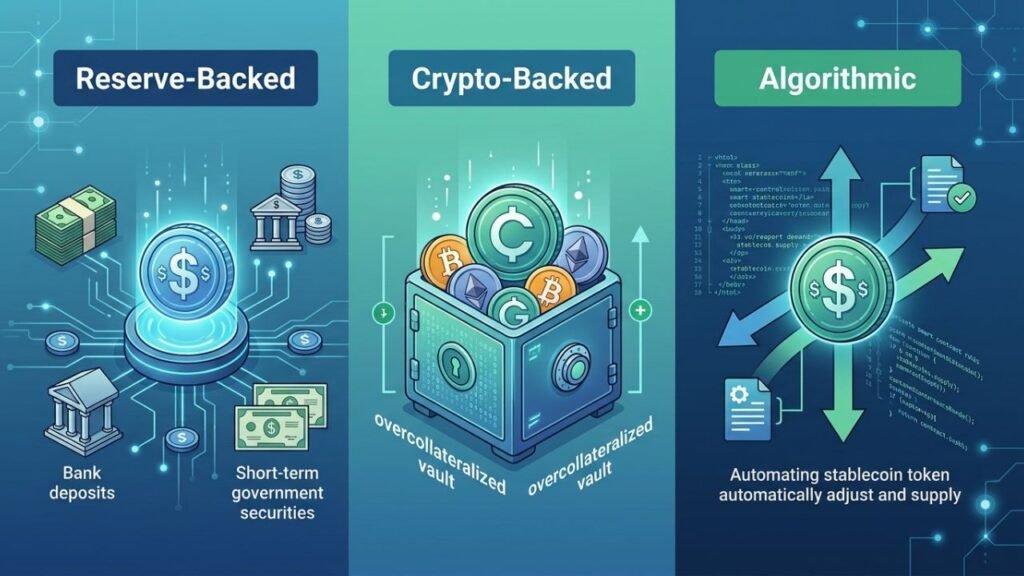
Each stablecoin has a different method of maintaining this value. Some are supported by cash and short-term financial assets, some with other cryptocurrencies, and some with algorithms or automated rules to control supply.
Examples include Tether (USDT) and USD Coin (USDC), two widely used dollar-linked stablecoins. Their specific reserves, governance arrangements, and regulatory treatment can differ.

How It Works
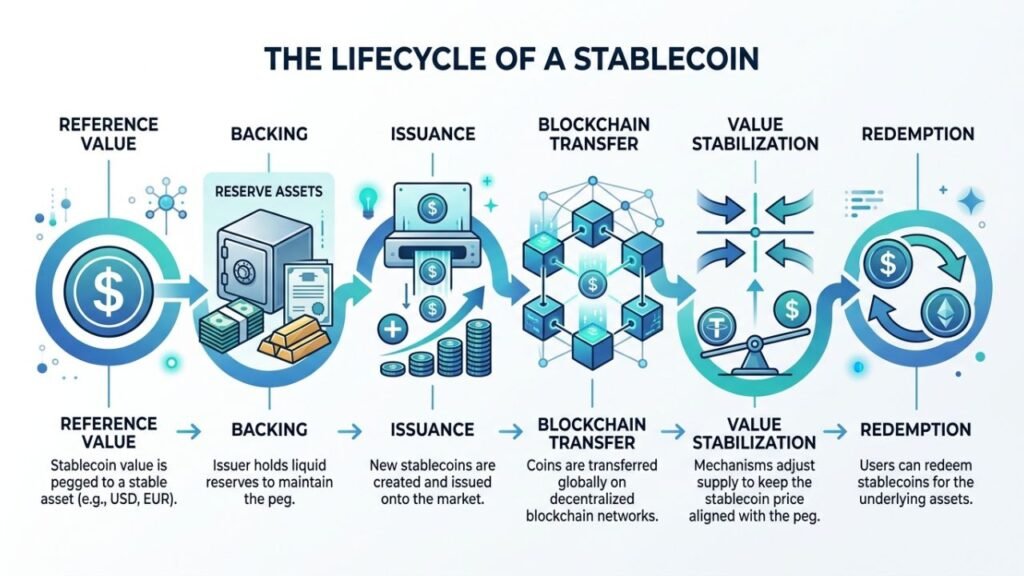
The basic process depends on the type of stablecoin, but it generally involves the following steps:
- A reference value is established.
A stablecoin may target $1, another national currency, gold, or another asset. - The issuer or protocol provides backing.
Reserve-backed stablecoins may hold cash, government securities, or other assets. Crypto-backed stablecoins may use digital assets as collateral. - Stablecoins are issued.
New tokens can be created according to the rules of the particular system, often when users provide the required assets or funds. - Tokens circulate on a blockchain.
Users can transfer stablecoins between compatible blockchain addresses and use them within supported applications. To send, receive, or hold stablecoins, users generally need a compatible crypto wallet or another form of digital-asset custody. For beginners, What Is a Crypto Wallet? explains the main types of crypto wallets and how they differ in terms of accessibility and security. - The system attempts to maintain the target value.
Depending on the design, this may involve redeeming tokens, adjusting collateral, changing supply, or using market mechanisms. - Tokens can potentially be redeemed or exchanged.
Some stablecoins allow holders to exchange them through an issuer or other market participants, although the exact process and eligibility requirements vary.
Key Features and Core Components
Reserve-backed stablecoins
The following are some examples of stablecoins that can be used to purchase goods and services from a particular company. Reserves may include cash, bank deposits, short-term government securities, or other assets. They matter as these affect a stablecoins’ ability to hold value; they also have a role to play with regards to its quality and transparency.
Crypto-backed stablecoins
These are collateralized with other cryptocurrencies. The systems may ask for users to pledge more collateral than the value of the stablecoins they receive, since the collateral itself can be volatile.
Algorithmic stablecoins
Algorithmic designs employ software rules to modify token supply or incentives to try and keep them at a set value. They may not have significant or any asset reserves to fall back on, and might face extra risks if markets turn quickly.
Blockchain-based transfers
Blockchain networks can be used to transfer stablecoins. Transactions can run at varying speeds and price on varying networks.
Benefits or Advantages
Reduced price volatility: Stablecoins are generally designed to fluctuate less than many other cryptocurrencies, making them more practical for transactions where predictable value matters.
Digital transfers: They can be transferred electronically between blockchain addresses, including across borders, without being limited to traditional banking hours.
Useful for crypto markets: Traders and other users can hold stablecoins as a way of maintaining exposure to blockchain-based markets without continuously holding more volatile cryptocurrencies.
Access to blockchain applications: Stablecoins can be used in decentralized finance and other blockchain applications that support them.
Potential payment utility: Businesses and individuals may use stablecoins for certain digital payments or international transfers, although practical usefulness depends on local regulations, available infrastructure, fees, and acceptance.
These advantages do not mean stablecoins are risk-free or universally cheaper or faster than conventional payment methods.
Risks, Drawbacks, and Limitations
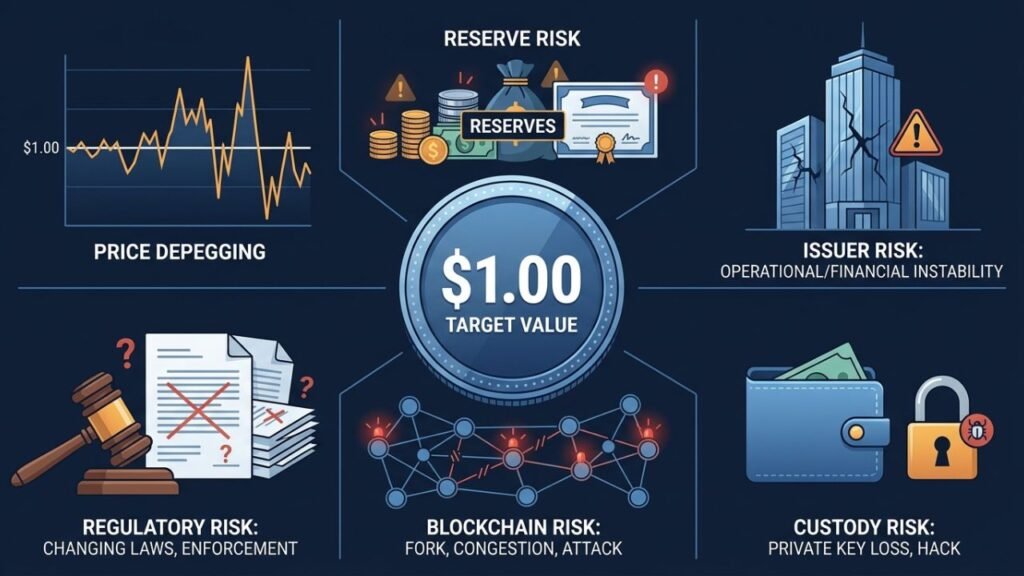
They can lose their target value
A stablecoin can trade above or below its intended price. A serious loss of confidence, problems with reserves, market disruption, or weaknesses in its design can cause a larger deviation from the target. The IMF’s research stablecoins stable discusses how large redemption requests can create pressure on stablecoin issuers and contribute to declines in the value of a stablecoin.
Reserve risk
Stablecoins are able to be traded above and below a set rate. Loss of trust, reserve problems, market instability and design flaws may lead to more deviation from targets.
Issuer and counterparty risk
Stablecoin-backed reserves are backed by a company’s management and security of its assets. Questions regarding reserves’ strength, liquidity, transparency and redemption policies may also be relevant.
Regulatory uncertainty
Stablecoin rules differ between countries and can change over time. Regulations may affect issuance, trading, redemption, taxation, reporting, or whether particular services are available.
Blockchain and technical risks
A blockchain can experience congestion, outages, software vulnerabilities, or high transaction fees. Sending a stablecoin to an incompatible or incorrect address can also result in loss of funds.
Custody and security risks
Users who hold stablecoins themselves are responsible for protecting their wallets and private keys. Losing access credentials or falling victim to fraud can result in permanent loss.
Not the same as a bank deposit
Holding a stablecoin does not necessarily provide the same protections as money held in an insured bank account. The legal rights and protections available to holders depend on the specific stablecoin and jurisdiction.
Algorithmic designs can be particularly complex
Stablecoins that depend heavily on algorithms, incentives, or other tokens can be difficult for beginners to evaluate. Their mechanisms may behave differently during severe market stress than they do under normal conditions.
Who It May Be Suitable For
Stablecoins may be useful for people who already understand blockchain wallets and want to:
- Transfer digital assets between supported platforms.
- Use blockchain-based applications that accept stablecoins.
- Hold a dollar-linked digital asset for short periods while participating in crypto markets.
- Explore blockchain payment or settlement systems where stablecoins are supported.
Their suitability depends on the user’s country, financial circumstances, technical knowledge, and the particular stablecoin involved.
Who Should Be Cautious or Avoid It
Be wallets should not be trusted unless you know about blockchain transactions, wallets, private keys, and stablecoin reserves.
Extra charge may also be pertinent for anyone who necessarily guarantees memory access to funds, expects bank-like consumer protections, or cannot give to lose money. The name and dollar peg of a stablecoin is not proof of its safety.
Also, users need to look at relevant regulations and taxes while transacting with stablecoins especially large ones.
Alternatives or Related Options
Bank deposits: Traditional bank accounts provide a familiar way to hold national currency and may offer protections that do not apply to stablecoins.
Cash: Physical currency has no blockchain or wallet requirements and can be useful for ordinary local transactions.
Money-transfer services: Conventional remittance and payment providers may be more suitable when recipients need to receive funds directly in local currency.
Other cryptocurrencies: Assets such as Bitcoin and Ether serve different purposes but generally have much greater price volatility.
Tokenized traditional assets: Some blockchain systems represent conventional financial assets on-chain. These are different from stablecoins and can have their own legal, market, and issuer risks.
Frequently Asked Questions
Are stablecoins completely stable?
No. They are designed to maintain a stable value, but their prices can move away from their target. The degree and duration of these movements depend on the stablecoin’s design and market conditions.
Are stablecoins backed by real dollars?
Some are backed by cash or cash-equivalent assets, but not every stablecoin works this way. Others use cryptocurrencies, commodities, or algorithmic mechanisms.
Can stablecoins be used to send money internationally?
They can be utilized for cross-border transfers on the blockchain, although the recipient might require a suitable wallet or exchange to change the stablecoin into native currency. It may not be practical due to the fees, regulations, liquidity and availability in the area.
Are stablecoins safer than Bitcoin?
They are typically not “safer,” but rather have a different risk profile. Stablecoins aim to decrease the volatility of the cryptocurrency price but come with risks regarding the reserves, the issuers, the redemption, the regulation, and the technical infrastructure.
Can I lose money holding a stablecoin?
Yes. It is possible for a stablecoin to deviate from its intended value, and it is additionally possible for users to lose money because of fraud, wallet errors, technical issues, or issues with the reserves or issuer of a stablecoin.
Conclusion
A stablecoin is a cryptocurrency that operates within blockchain technology with an intention of being relatively price-stable compared with other currencies like dollars. They are useful for trading and utilizing electronic values, particularly with regard to cryptocurrencies and blockchain technology. Stability to be stable is an objective for this project but not an assurance. Stablecoins need to know about their support, who backs them up, how they can redeem these tokens, what risks exist with them and any legal protections that may apply to them within their country of operation. Stablecoins might be useful sometimes but not always equal with cash and bank deposit.