Cryptocurrency has become a widely recognized form of digital asset, attracting individuals, businesses, and investors around the world. If you’re new to digital assets, understanding the fundamentals before buying or storing cryptocurrency can help you recognize misleading claims and unrealistic promises. Our guide, What Is Cryptocurrency? explains how cryptocurrency works, common blockchain concepts, and the basic risks that every beginner should understand. Alongside its growing popularity, however, fraudulent schemes targeting cryptocurrency users have also become more sophisticated. Unlike many traditional financial transactions, cryptocurrency transfers are often irreversible, making it difficult to recover funds once they have been sent to a scammer.
Understanding how cryptocurrency scams work is an important part of protecting your assets and personal information. While no security measure can eliminate all risks, following established safety practices can significantly reduce the likelihood of becoming a victim. This article explains common cryptocurrency scams, practical ways to identify warning signs, and steps you can take to improve your security while using digital assets.

What Is Cryptocurrency Scam Prevention?
Cryptocurrency scam prevention refers to the collection of security practices and awareness strategies designed to help individuals recognize, avoid, and respond to fraudulent cryptocurrency schemes.
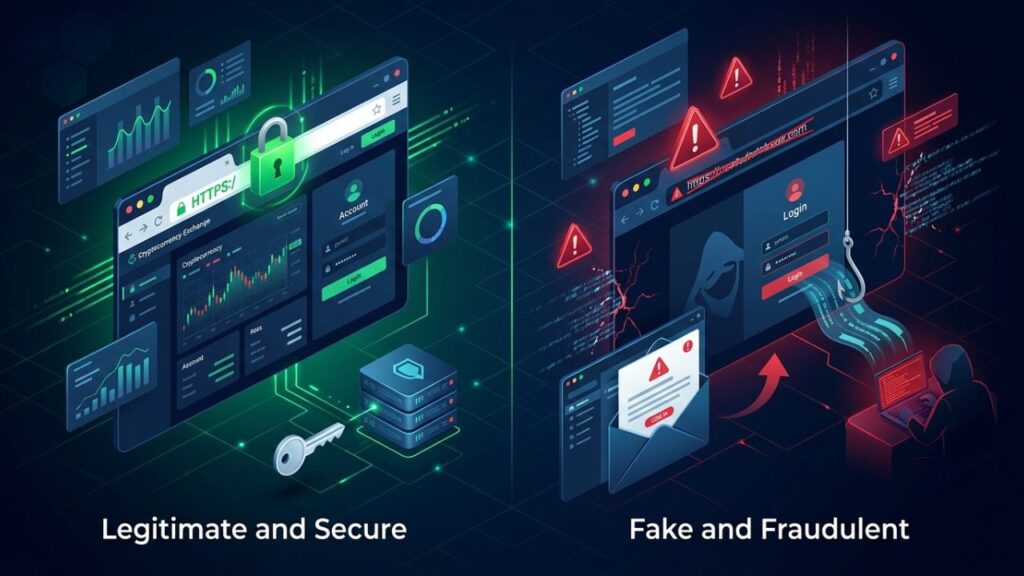
These scams may involve fake investment opportunities, phishing websites, impersonation of legitimate companies, fraudulent giveaways, romance scams, fake technical support, or malicious software that attempts to steal cryptocurrency or sensitive information.
The goal of scam prevention is not to eliminate investment risk but to reduce the likelihood of losing funds through deception, identity theft, or unauthorized access to digital wallets.
How It Works
Protecting yourself from cryptocurrency scams involves combining careful verification with good digital security habits.
- Verify the source before responding. Be cautious when receiving unexpected messages through email, social media, messaging apps, or phone calls. Legitimate organizations generally do not contact customers with urgent investment opportunities or requests for cryptocurrency.
- Research the platform carefully. Before using an exchange, wallet, or investment platform, verify that you are visiting the official website. Double-check the web address because scammers often create fake websites that closely resemble legitimate ones.
- Protect your wallet credentials. Your wallet’s private key or recovery seed phrase provides complete access to your cryptocurrency. Store these securely and never share them with anyone, including individuals claiming to represent customer support. Choosing the right type of wallet is another important part of protecting digital assets. If you’re unsure whether an online wallet or an offline hardware wallet better suits your needs, read Hot Wallet vs. Cold Wallet to understand the security differences and appropriate use cases for each option.
- Evaluate investment claims realistically. Cryptocurrency markets are volatile. Any person or company promising guaranteed profits, risk-free investments, or unusually high returns should be treated with extreme caution.
- Use stronger account security. Enable multi-factor authentication whenever available, create strong unique passwords, and regularly review your account activity for unauthorized access.
- Store large holdings securely. Many users choose hardware wallets for long-term storage because private keys remain offline, reducing exposure to online attacks. Smaller balances intended for regular trading may remain on reputable exchanges if appropriate security measures are enabled.
- Act quickly if fraud is suspected. Stop communicating with the suspected scammer immediately, preserve all available evidence, and report the incident to the appropriate authorities or reporting organizations.

Key Features or Core Components
Effective cryptocurrency scam prevention relies on several core security principles.
Awareness of Common Scam Types
Understanding common fraud methods helps users recognize warning signs early. These may include phishing emails, fake mobile applications, fraudulent investment platforms, impersonation scams, romance scams, giveaway scams, and fake technical support. Additional guidance on recognizing phishing attacks, online scams, and cybersecurity best practices is available from the Cybersecurity Security Agency (CISA).
Verification of Identity
Before sending cryptocurrency or sharing personal information, verify the identity of the individual or organization through official communication channels rather than relying solely on messages received online.
Secure Wallet Management
Choosing an appropriate wallet, protecting private keys, securely storing recovery phrases, and using hardware wallets for long-term holdings all contribute to stronger asset protection.
Strong Authentication
Using multi-factor authentication, secure passwords, and device security updates reduces the likelihood of unauthorized account access.
Careful Transaction Review
Cryptocurrency transactions generally cannot be reversed. Reviewing wallet addresses, transaction amounts, and recipient information before confirming a transfer helps prevent costly mistakes and fraud.
Benefits or Advantages
Following cryptocurrency security best practices offers several practical advantages.
One important benefit is reducing exposure to common scams that rely on urgency, emotional pressure, or false promises. Educated users are generally better equipped to identify suspicious behavior before funds are transferred.
Strong security practices also lower the risk of unauthorized wallet access through stolen credentials or phishing attacks.
Using trusted platforms, verifying website addresses, and protecting private keys contribute to a safer overall experience when managing digital assets.
Additionally, understanding scam warning signs encourages more informed decision-making and reduces reliance on unverified online advice or unsolicited investment recommendations.
While these measures cannot guarantee complete protection, they significantly improve personal security and risk management.

Risks, Drawbacks, or Limitations
Although preventive measures are valuable, they also have limitations.
Cryptocurrency Transactions Are Often Irreversible
Once cryptocurrency has been transferred to a scammer’s wallet, recovering those funds may be extremely difficult or impossible. This makes prevention considerably more important than attempting recovery afterward.
Scammers Continue to Evolve
Fraud techniques change rapidly. Criminals increasingly use artificial intelligence, convincing fake websites, cloned social media profiles, and sophisticated impersonation tactics that can appear highly legitimate.
Human Error Remains a Major Risk
Even experienced users may accidentally send funds to the wrong wallet, approve malicious smart contracts, or disclose sensitive information under pressure or deception.
Hardware Wallets Require Careful Management
Hardware wallets provide additional security but introduce their own responsibilities. Losing both the device and its recovery phrase could permanently prevent access to stored cryptocurrency.
False Sense of Security
Using reputable exchanges or security tools does not eliminate every risk. Users must remain cautious, verify transactions carefully, and stay informed about emerging fraud methods.
Who It May Be Suitable For
Cryptocurrency scam prevention practices are relevant for nearly anyone who owns, buys, sells, transfers, or stores digital assets.
This includes:
- First-time cryptocurrency users.
- Long-term cryptocurrency holders.
- Active traders.
- Individuals using decentralized finance (DeFi) applications.
- NFT collectors.
- Businesses accepting cryptocurrency payments.
- Anyone responsible for managing cryptocurrency on behalf of others.
Even individuals with relatively small cryptocurrency balances may benefit from following established security practices because scammers frequently target users regardless of account size.
Who Should Be Cautious or Avoid It
Some individuals should exercise additional caution when participating in cryptocurrency activities.
People with limited understanding of cryptocurrency wallets, blockchain transactions, or online security may wish to spend time learning the fundamentals before transferring significant amounts.
Individuals who frequently respond to unsolicited investment offers, social media promotions, or pressure-based sales tactics should be especially careful, as these are common characteristics of cryptocurrency scams.
Users who are unable to securely store passwords, recovery phrases, or authentication credentials may also face increased security risks.
Finally, anyone who believes an opportunity guarantees profits or eliminates investment risk should carefully reassess the situation before sending funds.

Alternatives or Related Options
While cryptocurrency remains popular, several related approaches may better suit individuals seeking different levels of risk or security.
Traditional regulated investment products, such as diversified mutual funds or exchange-traded funds (ETFs), may provide broader investor protections depending on local regulations.
Individuals interested in learning about blockchain technology without directly holding cryptocurrency can explore educational resources, academic materials, or blockchain development environments.
For digital payments, conventional banking systems and regulated payment services may offer stronger consumer protections, including dispute resolution mechanisms that are generally unavailable with cryptocurrency transactions.
Regardless of the financial product used, applying strong cybersecurity practices remains an important part of protecting personal information and financial assets.
Frequently Asked Questions
1. What is the biggest warning sign of a cryptocurrency scam?
One of the most common warning signs is a promise of guaranteed or risk-free returns. Legitimate cryptocurrency investments involve market risk, and no investment can guarantee profits.
2. Should I ever share my wallet’s private key or recovery phrase?
No. Your private key and recovery seed phrase provide full access to your cryptocurrency. Legitimate companies, exchanges, support representatives, and government agencies will not ask you to disclose this information.
3. Are well-known cryptocurrency exchanges completely safe?
Established exchanges generally invest in security measures, but no platform is immune to cyberattacks or fraud. Users should still enable multi-factor authentication, verify website addresses, and remain alert to phishing attempts.
4. What should I do if I think I have been scammed?
Stop communicating with the suspected scammer immediately. Save screenshots, wallet addresses, transaction IDs, and any related communications. Report the incident to your local law enforcement authorities, the relevant consumer protection agency, and blockchain abuse reporting platforms where appropriate.
5. Is a hardware wallet always necessary?
Not necessarily. Hardware wallets are commonly recommended for individuals storing larger cryptocurrency holdings over an extended period because they keep private keys offline. Smaller balances used for frequent transactions may be managed differently depending on individual security needs and risk tolerance.
Conclusion
Avoiding cryptocurrency scams requires a combination of awareness, careful verification, and responsible security practices. Protecting private keys, using reputable platforms, verifying website addresses, remaining skeptical of guaranteed profit claims, and ignoring unsolicited investment offers are among the most effective ways to reduce fraud risk.
Although no security strategy can eliminate every threat, informed decision-making and consistent digital security habits can significantly improve protection. Understanding common scam techniques and responding quickly to suspicious activity helps users navigate the cryptocurrency ecosystem more safely while recognizing both its opportunities and its risks.