A credit score is one of the most important factors banks and financial institutions consider when evaluating a loan application. It provides a quick summary of a borrower’s past credit behavior and helps lenders estimate the likelihood of timely repayment. Although a credit score is not the only factor used during underwriting, it often plays a significant role in determining whether a loan is approved, what interest rate is offered, and the amount that can be borrowed.
Understanding how credit scores influence lending decisions can help individuals make informed financial choices. Whether applying for a personal loan, home loan, auto loan, or credit card, knowing what lenders evaluate allows borrowers to better prepare before submitting an application.

What Is a Credit Score?
A credit score is a numerical representation of an individual’s creditworthiness based on their credit history. Credit reporting agencies calculate this score using information such as repayment history, outstanding debts, credit usage, and the length of credit history. Consumers can learn more about how credit scores work and how credit information is used through Understanding Credit Scores.
Different countries use different scoring models and ranges. For example, in Pakistan, many lenders refer to credit information maintained through the country’s credit reporting system, where scores often range up to 900. While lending criteria vary between financial institutions, many banks consider a score of around 700 or above as a positive starting point for loan assessment.
A higher credit score generally indicates responsible borrowing behavior, while a lower score may suggest greater lending risk.
How It Works
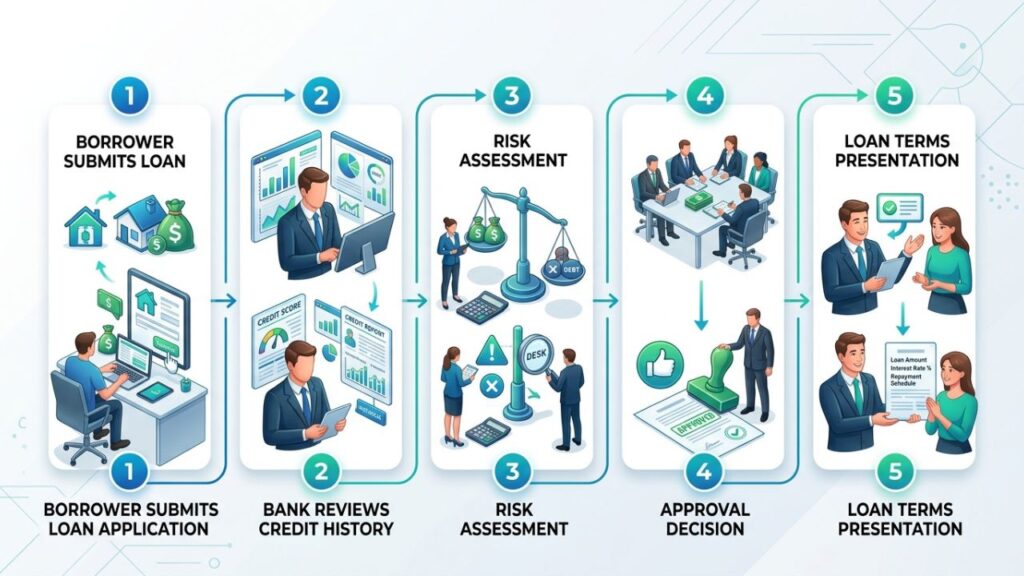
The loan approval process typically involves several steps in which the credit score plays an important role.
- Loan Application
The borrower submits personal, financial, and employment information along with the requested loan amount. - Credit Check
The lender reviews the applicant’s credit report and credit score to understand previous borrowing and repayment behavior. - Risk Assessment
The bank combines the credit score with other financial information such as income, employment stability, existing debt, and available collateral. - Loan Decision
Based on the overall assessment, the lender may approve the loan, request additional documentation, require collateral, adjust loan terms, or decline the application. - Determining Loan Terms
If approved, the lender sets interest rates, repayment periods, loan limits, and any additional conditions according to the borrower’s risk profile.
Key Features or Core Components
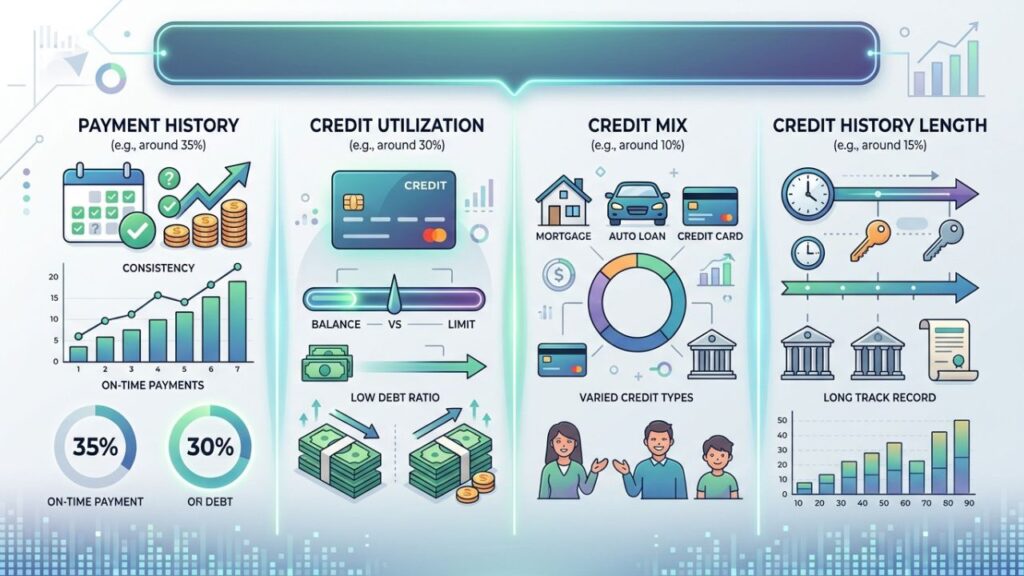
Payment History
Payment history is generally considered the most influential factor in a credit profile, often accounting for approximately 35% of the overall score in widely used scoring models. Missed loan installments, delayed credit card payments, defaults, and overdue utility bills may negatively affect future borrowing opportunities. Managing bank account balances responsibly also supports healthy financial habits. While occasional cash flow issues may happen, repeated insufficient funds can affect overall financial management and may indirectly influence a lender’s assessment of repayment behavior. For more information, read What Happens With Insufficient Bank Funds?
Credit Utilization
Credit utilization measures how much revolving credit is being used compared to the available credit limit. For example, using $300 from a $1,000 credit limit results in 30% utilization.
Maintaining utilization below approximately 30% is commonly viewed as a sign of responsible credit management, although lenders evaluate the overall financial picture rather than relying on this figure alone.
Credit Mix
Lenders often review the variety of credit accounts an individual manages. A balanced mix of products, such as installment loans and revolving credit, may demonstrate experience handling different forms of borrowing.
Length of Credit History
A longer history provides more information about long-term repayment behavior. Individuals with well-managed accounts over many years may present less uncertainty than those with very limited credit histories.
Recent Credit Applications
Submitting many credit applications within a short period can sometimes indicate increased borrowing needs. Some lenders may consider frequent applications as part of their overall risk assessment.
Benefits or Advantages
Higher Approval Probability
A strong credit score generally improves the likelihood of passing the lender’s initial screening process. While approval is never guaranteed, applicants with positive credit histories often meet an important qualification criterion.
Lower Interest Rates
Borrowers with higher credit scores frequently qualify for lower interest rates because lenders may consider them less likely to default. Lower interest rates can reduce the total borrowing cost over the life of a loan.
Larger Loan Amounts
A solid repayment history may support eligibility for higher borrowing limits. Lenders often feel more comfortable extending larger amounts when applicants demonstrate consistent financial responsibility.
Longer Repayment Periods
Some borrowers with stronger credit profiles may receive access to longer repayment terms, allowing monthly payments to be spread over a longer period. The suitability of a longer tenure depends on the borrower’s financial circumstances and the total interest payable.
More Flexible Lending Terms
Applicants with stronger credit profiles may receive more favorable loan conditions, including lower fees or less restrictive lending requirements, depending on the lender’s policies.

Risks, Drawbacks, or Limitations
A Good Score Does Not Guarantee Approval
Although credit scores are important, lenders also evaluate income, employment stability, existing financial obligations, debt-to-income ratio, and available collateral. An applicant with a high score may still be declined if other financial factors do not meet lending requirements.
Low Scores Can Increase Borrowing Costs
Individuals with weaker credit profiles may still qualify for certain loans, but they often face higher interest rates or additional lending conditions. Over time, these higher borrowing costs can significantly increase the total repayment amount.
Reduced Loan Options
Some banks have minimum credit score requirements for particular loan products. Applicants below these thresholds may have fewer available financing options.
Stricter Collateral Requirements
Even for secured loans such as vehicle or home financing, lenders may require larger down payments or lower financing ratios if the borrower’s credit history indicates elevated risk.
Errors Can Affect Credit Reports
Credit reports may occasionally contain inaccurate or outdated information. Incorrect records can influence lending decisions if they are not identified and corrected through the appropriate reporting process.
Credit Scores Change Over Time
Credit scores are dynamic rather than permanent. Missed payments, increasing debt levels, or opening multiple new credit accounts may cause scores to decline, while consistent repayment and responsible credit management may contribute to gradual improvement.
Who It May Be Suitable For
Understanding credit scores is valuable for a wide range of borrowers, including:
- Individuals planning to apply for personal, home, or auto loans.
- First-time borrowers seeking to understand lending requirements.
- Credit card users who want to manage borrowing responsibly.
- People planning major purchases that may require financing.
- Consumers interested in improving their overall financial profile before applying for credit.
Who Should Be Cautious or Avoid It
While monitoring credit scores can be beneficial, some individuals should exercise caution when relying solely on them.
- Borrowers should avoid assuming that a high score guarantees loan approval.
- Individuals should not take on unnecessary debt simply to improve their credit profile.
- Consumers facing financial hardship should prioritize sustainable repayment over maintaining a particular score.
- Applicants should avoid submitting numerous loan applications within a short period without understanding the potential impact on their credit profile.
Alternatives or Related Options
When a traditional bank loan is unavailable or unsuitable, borrowers may consider other financing options depending on their circumstances. Some borrowers compare non-bank lenders when exploring financing options, as they may offer different loan terms, approval requirements, and interest rates. Understanding these differences can help borrowers evaluate alternatives more effectively. Learn more in OneMain Financial Loans Explained.
Secured Loans: Loans backed by assets such as vehicles or property may offer different approval criteria, although lenders still review credit history.
Co-Applicant or Guarantor Arrangements: Some financial institutions may consider an application with a financially qualified co-applicant or guarantor, subject to their lending policies.
Credit Builder Products: In some markets, financial institutions offer products designed to help individuals establish or rebuild a credit history through responsible repayment.
Savings-Based Financing: Some borrowers choose to delay borrowing until they have accumulated sufficient savings, reducing the amount that needs to be financed.
Frequently Asked Questions
1. What credit score is generally considered good for loan approval?
The definition of a good credit score varies by country, lender, and scoring model. In Pakistan, many banks consider a score of around 700 or higher as a favorable starting point, although approval depends on multiple financial factors.
2. Can I get a loan with a low credit score?
Possibly. Some lenders approve applicants with lower credit scores, but they may offer smaller loan amounts, higher interest rates, shorter repayment terms, or require additional collateral.
3. Does checking my own credit score lower it?
In many cases, reviewing your own credit report or score does not affect your credit rating. However, formal credit inquiries made during certain loan applications may be treated differently depending on the reporting system.
4. How can I improve my credit score?
Making payments on time, maintaining reasonable credit utilization, avoiding unnecessary borrowing, and reviewing credit reports for accuracy are common practices that may support gradual improvement over time.
5. Is a credit score the only factor banks consider?
No. Banks also evaluate income, employment history, existing debt obligations, repayment capacity, collateral (where applicable), and internal lending policies before making a final decision.
Conclusion
Credit scores serve as an important indicator of borrowing behavior and play a central role in modern lending decisions. They help financial institutions assess risk while influencing loan approval, interest rates, borrowing limits, repayment terms, and, in some cases, collateral requirements. However, a credit score represents only one part of the overall assessment.
Understanding the factors that shape a credit score—such as payment history, credit utilization, credit mix, and responsible borrowing—can help individuals make informed financial decisions. At the same time, borrowers should recognize that lenders evaluate a broader financial profile, making sound financial management more important than focusing on a single number alone.